
Generative Agents: Are We Entering the Matrix or Westworld?
How generative agents are blurring the lines between reality and simulation

Have you ever played with a toy that can talk and move around? It might seem like the toy is alive, but it's actually just a machine that is programmed to do certain things.
Scientists are working on creating a new type of machine that can do even more things than a toy. They call these machines "generative agents." Generative agents can remember things, learn from their experiences, and make plans for the future. They can even interact with other generative agents and the environment around them.
Joon Sung Park and his team worked on this quite thoroughly and published a research paper on August 23 explaining how generative agents can be a believable simulacrum of human behavior for interactive applications.
Arxiv for the research paper: https://arxiv.org/pdf/2304.03442.pdf
Github link: https://github.com/joonspk-research/generative_agents (core simulation module for generative agents)
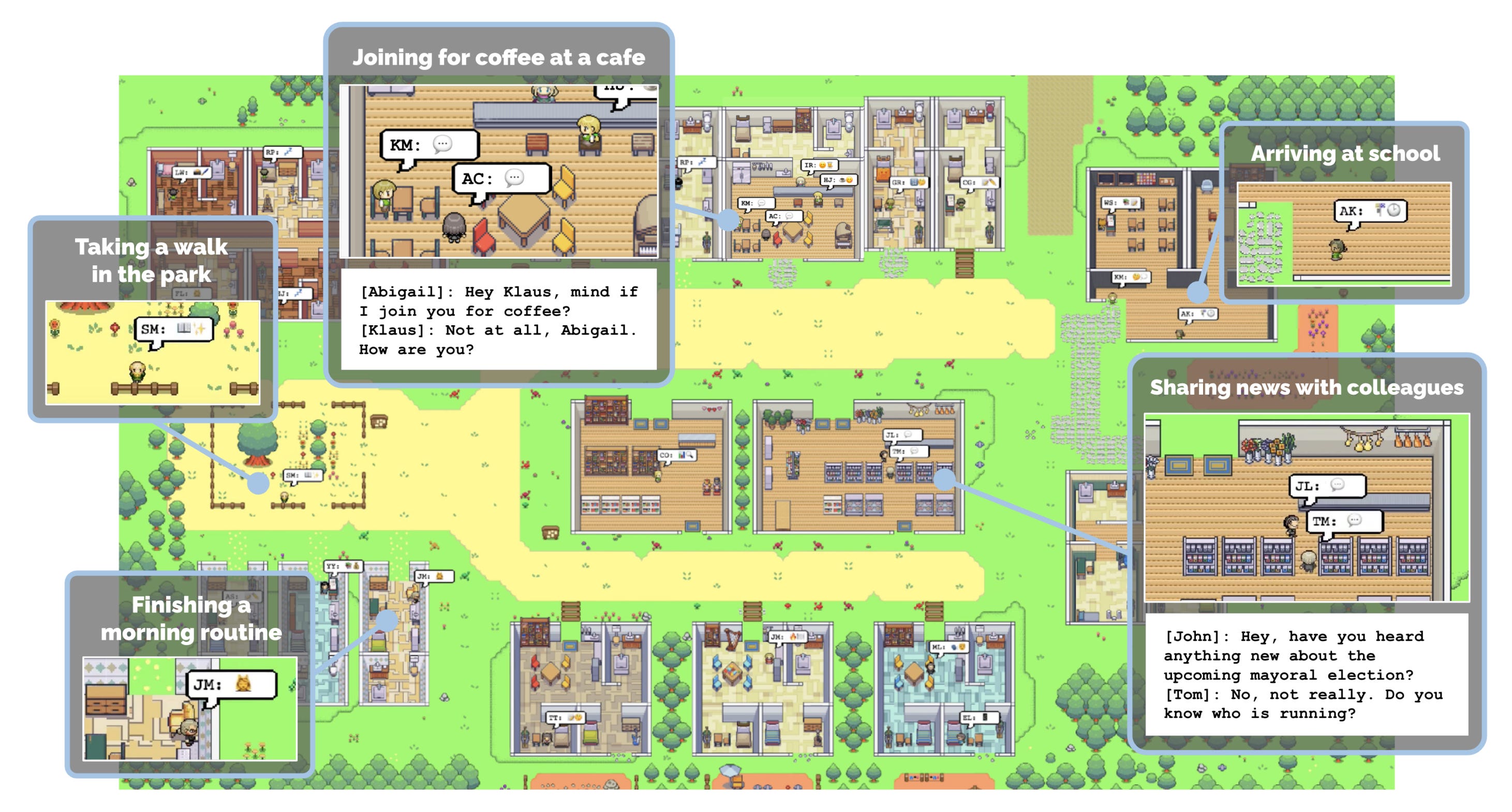
Generative agents are computational software agents that are able to remember, retrieve, reflect, interact with other agents, and plan through dynamically evolving circumstances. This makes them capable of simulating a wide range of human behaviors, from everyday activities such as cooking breakfast and going to work to more complex interactions such as forming relationships and negotiating agreements.
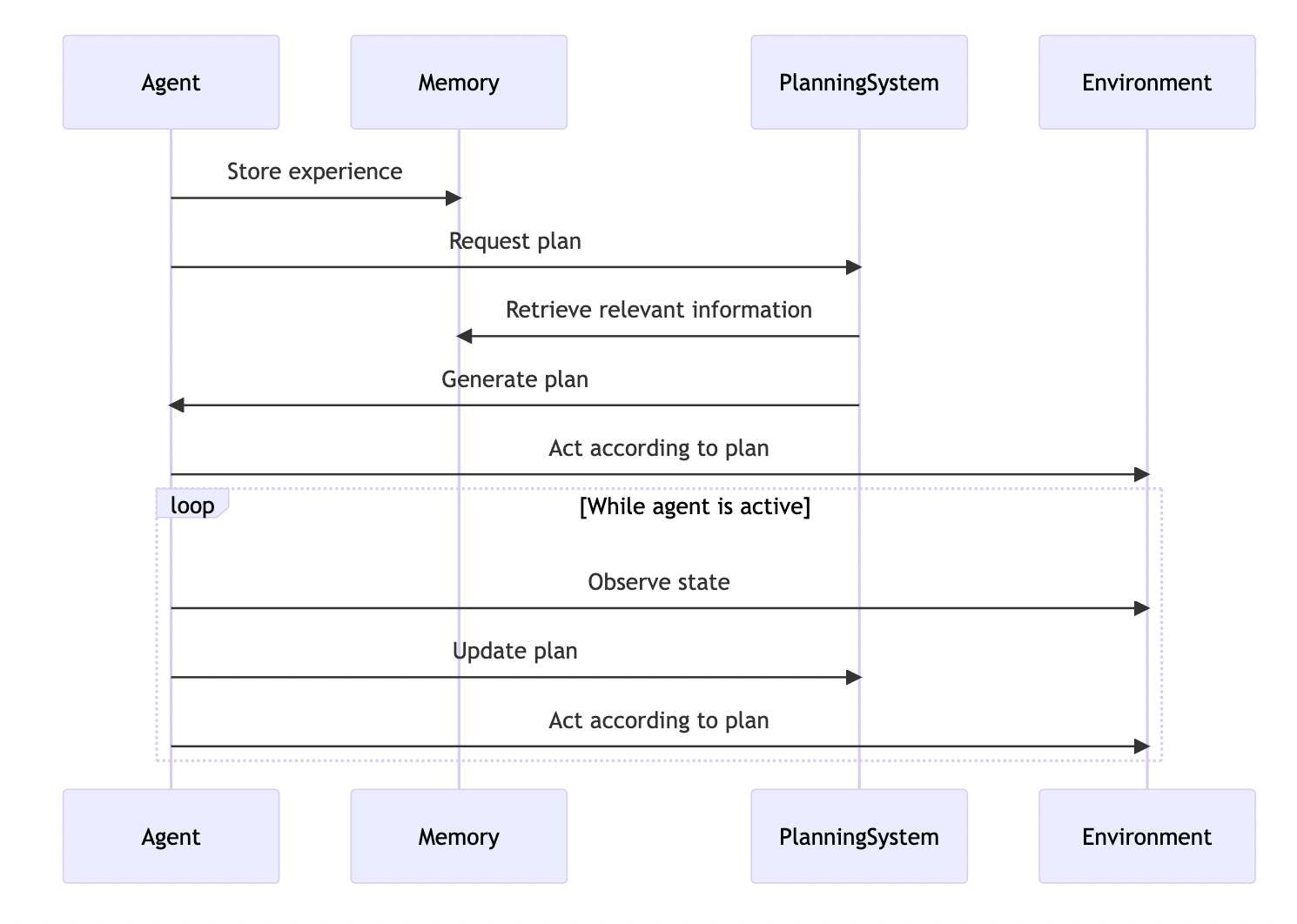
The generative agent architecture is composed of three main components:
A large language model: The large language model is responsible for generating natural language text that describes the agent's actions and thoughts. It is trained on a massive dataset of text and code, which allows it to generate realistic and coherent text.
A memory system: The memory system stores a complete record of the agent's experiences, including its interactions with other agents and the environment. This allows the agent to learn from its past experiences and make better decisions in the future.
A planning system: The planning system uses the information in the memory system to generate plans for the agent's future behavior. The planning system is able to take into account the agent's goals, the current state of the world, and the potential consequences of its actions.
The following diagrams illustrate the different components of the generative agent architecture:
Generative agents have the potential to be used in a variety of applications, such as:
Virtual worlds and simulations: Generative agents can be used to populate virtual worlds with believable and interactive characters. This could be used to create more immersive and engaging experiences for users.
Training and education: Generative agents can be used to create realistic training scenarios for students and professionals. This could be used to prepare people for real-world situations in a safe and controlled environment.
Research: Generative agents can be used to study human behavior in a controlled setting. This could be used to gain insights into the factors that influence human decision-making and social interaction.
The research on generative agents is still in its early stages, but it has the potential to revolutionize the way we interact with computers. Generative agents could make computers more human-like and more capable of understanding and responding to our needs. This could lead to new and innovative applications that improve our lives in many ways.